
This two-week itinerary in Southern Peru is adventurous and budget-friendly, traveling by bus from the Pacific coast via Arequipa and Lake Titicaca to Cusco and the Sacred Valley, with a a stay in the Peruvian Amazon at the end. Adding a multiple-day trek to Machu Picchu and a more relaxed pace, you can easily turn this into a three-week trip.
Getting Around in Peru
PeruHop is a long-distance hop-on, hop-off service. You choose between different routes to include the stops that you plan to visit on your Peru trip. This two-week itinerary coincides with the Full South To Cusco pass (except the last stretch to the Amazon by plane). You can pick your travel days for each leg of the trip and pick-ups/drop-offs from hotels are included. I relied on regular public transport in Peru, but PeruHop seems like an even safer and more convenient way to explore the country.
Day 1-3: Lima & the Pacific Coast
Day 1: Arrival in Lima
This itinerary starts in Lima, Peru’s capital. From June to October, this stretch of the Pacific coast is coated in a thick layer of fog named La Garúa. Luckily, you can seek shelter in Lima’s amazing restaurant scene.
- Lima has long been a culinary hotspot, with chef Gastón Acurio at the forefront. Try Peruvian classics at Acurio’s hip cevichería La Mar in Miraflores, or dine at his flagship restaurant Astrid y Gastón.
- The Larco Museum houses an impressive collection of pre-Colombian art and an inviting café-restaurant in the lush garden.
- End the day at Parque de la Reserva with the Magical Water Circuit, a fountains and light show scheduled every evening.


Stay: Lima
Day 2: Paracas, Ica & Huacachina
Head south of Lima along the Pacific coast to visit Paracas, Ica, Huacachina and Nazca over a course of two days. You can take a two-day organized trip from Lima, or travel by public bus/PeruHop between these destinations.
- Paracas is the gateway to Islas Ballestas. These rocky islands can be reached by a short speedboat ride and pack a variety of birds and wildlife. Tours are only scheduled in the morning, so board an early bus in Lima to arrive prior to 10 AM.
- The city of Ica is the birthplace of Peru’s national spirit pisco. Take a tour and tasting at one or more wineries on the Ruta del Pisco.
- Huacachina is a scenic desert oasis surrounded by impressive sand dunes, which are best enjoyed on a buggy or sandboard tour around sunset.


Stay: Huacachina
Stay overnight in Huacachina to climb the dunes before dawn. The morning exercise is rewarded with a beautiful sunrise from the top.
Day 3: Nazca Lines
The Nazca lines are a series of geoglyphs designated UNESCO World Heritage. This mysterious archeological site is located four hours south of Ica in the Nazca desert.
- The only way to get a good view of the Nazca lines is from high up in the air. Planes with a capacity of up to 12 passengers depart from the Nazca airport. Motion sickness is very common on these small airplanes.
- Visit Planetarium Maria Reiche in the town of Nazca to learn more about the history and mystery of the Nazca Lines.
- If you book a 2-day organized tour from Lima, ask to stay in Nazca instead of returning to Lima. By departing from Nazca instead of Lima, you cut the bus ride to Arequipa short by 6 hours.


Stay: Night bus Nazca-Arequipa
Night buses depart Nazca around 8 PM to arrive in Arequipa by 6 AM. The 10-hour journey is comfortable enough to get a decent sleep, thanks to the fully-reclinable seat option (cama) on public transport.
Day 4-6: Arequipa & the Colca Canyon
Day 4: Arequipa
Known as The White City, Arequipa is a charming colonial city set against the backdrop of three volcanoes. Spend a day exploring Arequipa before venturing out to the Colca Canyon.
- The Santa Catalina Monastery is a walled town within the historic center of Arequipa. You can get lost in the maze of narrow, colorful streets.
- Head to Iglesia de la Compania for coffee in a unique setting. The attached cloisters have been transformed into a complex of cafés and shops.
- Mercado San Camilo is a feast for the eyes, with everything from exotic produce to prepared local dishes and artifacts used for rituals, like stuffed llama fetuses.
- The Museo Santuarios Andinos harbors Juanita, a 500 year-old child mummy that was offered to the Inca gods and found on the Ampato Volcano.
- End the day preparing a delicious 2-course Peruvian dinner during a cooking class at the beautiful courtyard of Casa de Avila.


Stay: Arequipa
Day 5-6: Colca Canyon
Peru’s Colca Canyon is one of the deepest canyons in the world and home to the Andean condor. There are several ways to take in the stunning scenery.
- Overnight sightseeing tours (2D/1N) depart from Arequipa. These tours stop at several viewpoints of the canyon, hot springs and Chivay town. Some tours offer a transfer to Puno instead of returning to Arequipa, saving 5 hours of total travel time.
- The most impressive way to see the canyon is to hike to the bottom and back out. This trekking can be done in 2 days or 3 days, following the exact same trail but staying one versus two nights in the canyon. The starting point of the trail to the bottom of the canyon is the town of Cabanaconde. If you book with a guide, the transfer from Arequipa and on to Puno (to save travel time) is included. Public buses run between Arequipa and Cabanaconde, but not on to Puno.
- Sangalle is a little oasis at the bottom of the canyon. It houses several basic accommodation options, some of them with a pool to cool off after a day of hiking. From Sangalle, it takes 3 to 4 hours to tackle 1,100 meters (3,600 feet) of elevation gain back to Cabanaconde.


Stay: Arequipa or Puno
If you continue straight to Puno from the Colca Canyon instead of returning to Arequipa, you arrive at Lake Titicaca a day ahead of this schedule. You can use the extra day for an overnight stay on the islands of Lake Titicaca.
Day 7-8: Lake Titicaca
Day 7: Trip to Puno
Most private tours with transfer to Puno (including PeruHop) make several stops on the 7-hour drive from Cabanaconde or Arequipa:
- There are two thermal springs around the town of Chivay, La Calera and Chacapi Hot Springs. Soaking in warm waters is a welcome activity after climbing out of the Colca Canyon.
- The Mirador de los Andes is located at 4,910 meters (16,109 feet) above sea level, offering views of five different volcanoes.
- Scenic Laguna Lagunillas is a habitat for pink flamingos, in addition to llamas and alpacas that roam the shore.


Stay: Puno
We stayed in GHL Hotel Lago Titicaca, set on a small island connected to the shore of Lake Titicaca. The rooms and elegant dining room look out over the lake. For a 5-star hotel with spectacular views, the rates are a steal.

Day 8: Lake Titicaca
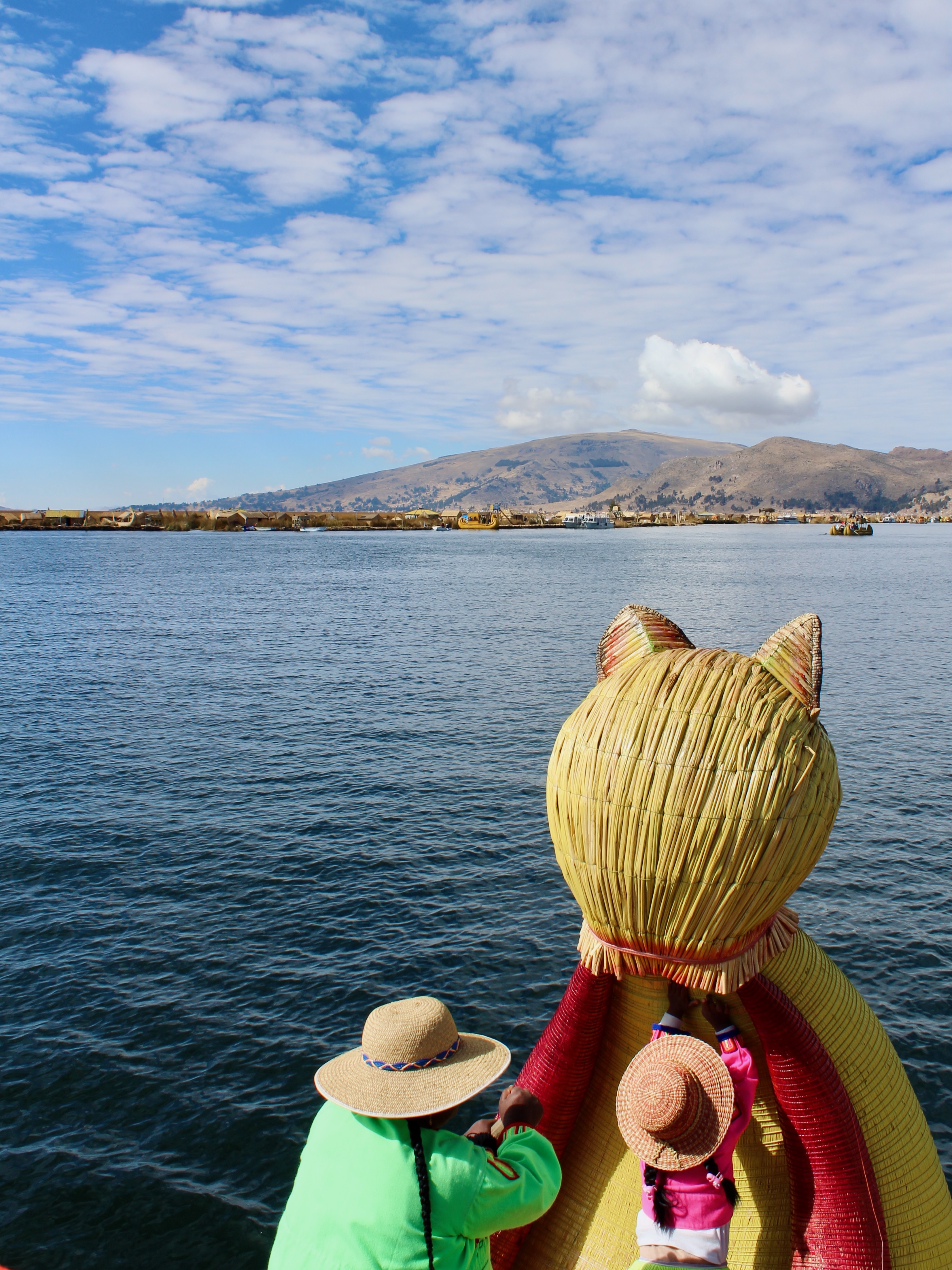
Lake Titicaca sits at 3,810 meters (12,500 feet) above sea level, making it the highest large lake in the world. The island communities embrace tourism, as it allows them to maintain their century-old traditions up until today.
- Half-day tours only visit the man-made Uros Floating Islands, which are kept afloat by constantly adding layers of reed. The Uros people offer rides in beautiful reed boats for a small fee.
- Full-day tours visit the Uros Islands followed by Taquila Island, recognized for quality knitwear made by men. The color of their knitted hat reveals their marital status. We kayaked to Uros Islands and continued by speedboat to Taquile on our full-day tour.
- Two-day overnight tours visit the Uros Islands and Taquile Island, with a homestay at a local family on Taquile or Amantaní Island.


Stay: Night bus Puno-Cusco
Night buses depart Puno around 10 PM to arrive in Cusco at 6 AM.
Day 9-12: Cusco & the Sacred Valley
Day 9: Cusco
Cusco is the gateway to Peru’s Wonder of the World, but the city and surrounding valley hold many other stunning locations to visit.
- Spending a day in Cusco is a good start to explore this charming colonial city and acclimatize to the altitude, before doing any hikes.
- Check out my article on 10 top activities in Cusco and the Sacred Valley to plan your stay.


Stay: Cusco
Day 10: Sacred Valley
The Sacred Valley is scattered with archeological sites dating back to the Inca Empire. It continues to harbor many indigenous villages and communities, thanks to the fertile soils.
- The most convenient way to explore the Sacred Valley is on a full-day tour from Cusco, visiting the ruins of Pisac and Ollantaytambo, the textile town of Chinchero and the salt mines of Maras.
- From Ollantaytambo, trains run to Aguas Calientes, the base town to visit Machu Picchu. Most Sacred Valley tours plan Ollantaytambo as the final stop, so you can continue by train to Aguas Calientes instead of returning to Cusco. Trains range from basic to panoramic and luxury, with floor-to-ceiling windows, meals and performances included.


Stay: Aguas Calientes
By overnighting in Aguas Calientes, you can visit Machu Picchu right at opening time the next morning.
Day 11: Machu Picchu
The majestic Inca citadel requires advance reservations to visit. Book your slot right at opening time, so you can enjoy the site without the crowds for an hour or two.
- The trail to Machu Picchu from Aguas Calientes entails a strenuous hour of stair climbing, but is more rewarding than taking the bus to the entrance.
- Hikes within the Machu Picchu Site need to be reserved well in advance as well. Climbing to the top of Machu Picchu Mountain at 3,061 meters (10,043 feet) is rewarded with panoramic views of the site and the entire valley. This hike is a less crowded alternative to the popular Huayna Picchu Mountain.
- With 3 to 4 extra days, you can make your way to Machu Picchu on a multiple-day trekking. The classic Inca Trail arrives directly to the Sun Gate in 4 days, but sells out months in advance. The Salkantay Trek is an amazing alternative as it traverses incredibly diverse scenery, from turquoise mountain lakes to lush jungle. You can have a look at my review of the 4D/3N Salkantay Trek.


Stay: Cusco
Day 12: Rainbow Mountain
Vinicunca is known as Rainbow Mountain for its spectacular layers in different colors. With the highest point of the hike at 5,100 meters (16,732 feet), you need to be well acclimatized to the altitude and relatively fit to climb Vinicunca.
- Full-day trips depart from Cusco before dawn and transport you to the trailhead in Phullawasipata at 4,630 meters, followed by a 7-km out-and-back hike to the viewpoint of Rainbow Mountain.


Day 13-14: Peruvian Amazon
Peru is home to the second-largest portion of the Amazon Rainforest, after Brazil. A stay in the Peruvian Amazon offers an introduction to this vast and diverse area, away from the main tourist track.
- Puerto Maldonado is the gateway to the Amazon in Southern Peru. One-hour flights to Puerto Maldonado depart Cusco several times a day, with stunning panoramas of the Andes as a bonus.
- With limited time, the best way to explore the Amazon is on an organized multiple-day trip. These include accommodation, transportation, meals and guided activities.
- 3-day, 2-night trips are a minimum to make the trip to Puerto Maldonado worthwhile. Stay in a jungle lodge while exploring Tambopata National Reserve, including a trip to Lake Sandoval to spot giant otters, a clay lick to see macaws and a nocturnal boat tour to get up close with caimans. 4-day, 3-night trips offer additional activities like zip-lining, canopy walks or fishing and more time to relax on the lodge’s grounds.


Day 15: Return to Lima
On the final day of the jungle stay, you will be transported to Puerto Maldonado Airport after breakfast. Flights to Lima depart in the morning and around noon. You could fly out of Lima that same night or book one more night in the capital.
Related Posts

Top 10 Activities in Cusco & the Sacred Valley, Peru
These 10 unique activities explore the best of nature, history, culture and cuisine in Cusco and the beautiful Sacred Valley.

Review of Peru’s Salkantay Trek: Spectacular 4-Day Hike to Machu Picchu
Discover what to expect on each day of the Salkantay Trek, practical details and our overall experience.
Leave a Reply